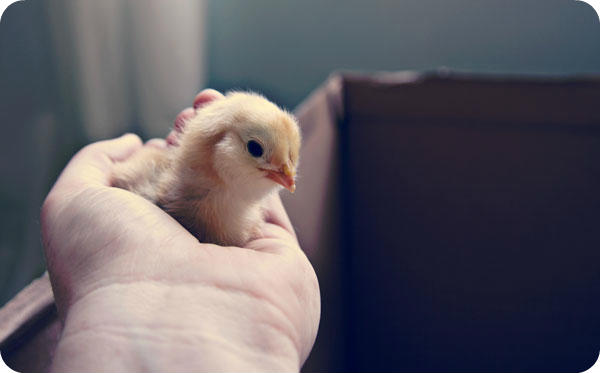
When I was a little girl my dad and I built a chicken coop together in our backyard. When we were done he got me three little chicks of my very own. Even though I am all grown up, I still remember hammering the nails into the shingles of the roof. Since then, having another little flock has been at the top of my “dreaming of” list many times and now there is a box of chicks sitting in my living room.
One of the big debates was whether to go buy a batch or to adopt from the Kindergarteners after they had hatched and studied them. The concern has always been, “Will we get a rooster?” After careful analysis caving to my desire, I decided to live life on the wild side and arrived home one day with a box of nine chicks.
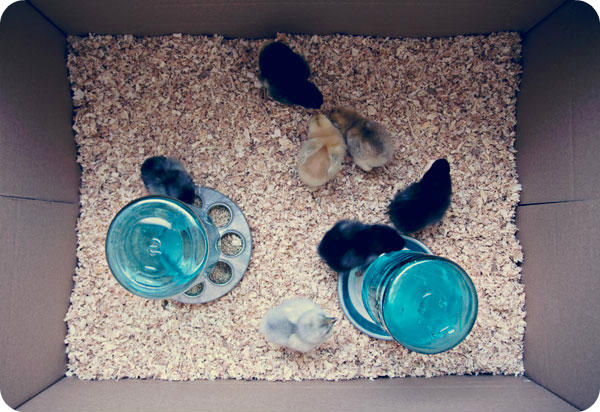
They were two days old, little fluff balls that could fit in your hand. My heart melted each time one had a fit of narcolepsy and conked out while balled up in my palm. The goal of bringing so many home was to observe their behaviors and try to determine which ones would get along and which ones were most likely hens.
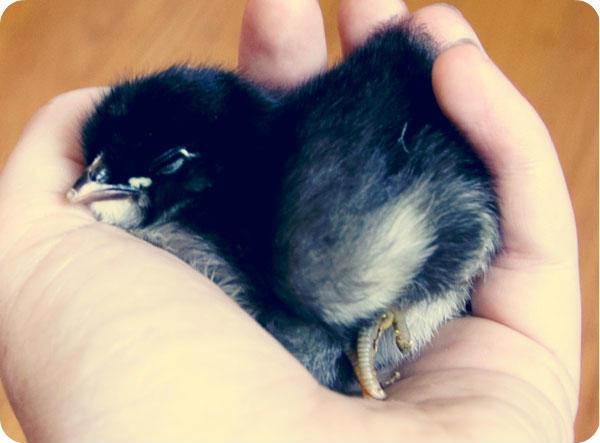
The next night I brought home the favorites from the first batch and a couple new ones. Jeff thought it was hysterical and called it “Chick Survivor.” Who would make it to the final four?
To anyone thinking about having a little urban flock of their own, I highly recommend the book A Chicken in Every Yard. It is fun to read and has all the information I have needed so far to take care of my little ones. To start you off, here are some of the basics that will help you prepare for their arrival home.
Box:
- You will need a large box. I think a cardboard box is ideal because you can compost it once your little layers move outside.
- The box needs warm and cool spots, which means you need a big box and a heat lamp. According to several sources, a 100 watt bulb does the trick.
Bedding:
- Your box should be lined with bedding, A Chicken in Every Yard recommends Pine Chips.
- If you have bedding made of very fine chips, you will have dust everywhere.
- Cedar chips are too aromatic and can make it difficult for the chicks to breath.
- Newspaper can become slippery and cause leg problems.
Food & Water:
- Chicks need special chick feed that has grit to help them digest their food.
- Having fresh clean water is very important for the health of your flock. Dirty water can cause health problems.
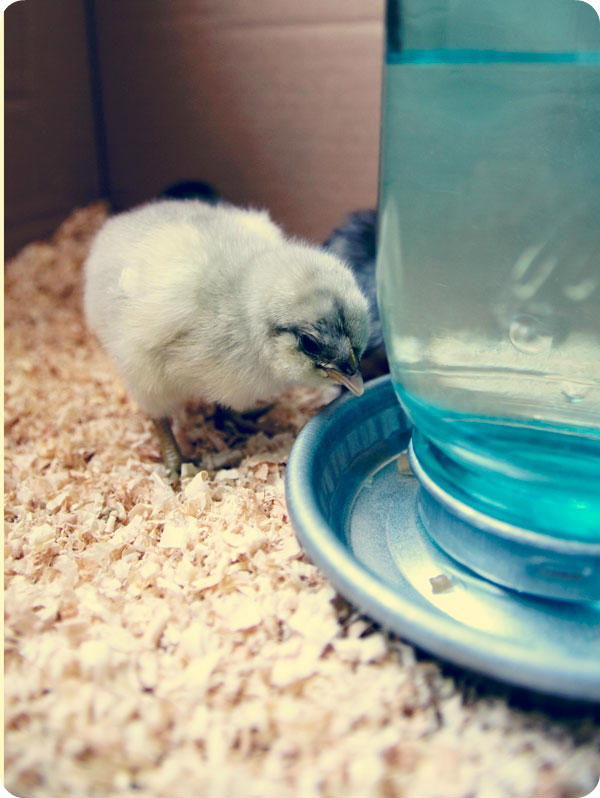
- I bought a small water and feeder at the pet store. They had metal trays and plastic dispensers, simple and functional. When I got them home I noticed that the sticker on the bottom that read “mason jar” feeders. I was pumped when I tried to attach my teal mason jars and they fit perfectly! Turns out they were simple, functional, and cute.
The final four have now been picked. I’ll have to introduce them to you very soon! They are starting to enter their awkward adolescent phase, half feathered and half fuzz. It is amazing how quickly they grow!


{ 3 comments… read them below or add one }
dreamy photos, those little chicks are SO CUTE.
Haha, I love it! Chick Survivor…and narcolepsy never looked so cute.
They are pretty stinkin’ adorable. They are so big now! Must post more pictures soon!